Viewpoints: Will Washington, D.C. Achieve Vision Zero?

Is a city with no serious accidents or fatalities from traffic collisions an achievable vision? In February 2015, Washington, D.C. Mayor Muriel Bowser launched the city’s Vision Zero Initiative. Its stated objective: “By the year 2024, Washington, DC will reach zero fatalities and serious injuries to travelers of our transportation system, through more effective use of data, education, enforcement, and engineering.” Having both lived and … Continue reading Viewpoints: Will Washington, D.C. Achieve Vision Zero?

Envisioning an Active City: Lessons from Montréal

Oh, Canada. The United States’ neighbor to the North seems to have public services down to a science. On a recent trip to Montréal, Quebec, my suspicions of superior public amenities were confirmed as seen in the city’s compact urban design and nearly flawless transportation infrastructure. Montréal and other Canadian cities embrace the principles of smart growth with dense urban centers and transit-oriented development, and this … Continue reading Envisioning an Active City: Lessons from Montréal

What this election means for planners

As you likely know, November 8 is Election Day in the United States. Voters will decide who will succeed President Obama and, with that decision, the policy direction for our nation over the next four years. As our nation’s largest cities continue to grow, federal policy, particularly in terms of housing and transportation, will play a significant role in shaping the evolution of our nation’s urban … Continue reading What this election means for planners

Durham’s Crisis of Priorities: Parking and Housing

A version of the following piece was originally published in the Triangle-based Indy in response to an article about the downtown Durham parking “crisis”. The article mentions that the city of Durham will soon begin charging for on-street parking and that local leaders are debating whether to use two county-owned downtown parcels for parking or affordable housing. The assumption that plenty of parking should be … Continue reading Durham’s Crisis of Priorities: Parking and Housing

12 Takeaways from TRB

Back in January, most of the UNC Planning students specializing in transportation made their annual pilgrimage to Washington, DC, to attend the Transportation Research Board conference. Here are a few of the highlights that we wanted to share: It turns out that sharrows might make roads less safe for bikes.  2. There’s still no consensus about exactly why people are moving back to cities at … Continue reading 12 Takeaways from TRB

Placemaking, Underground: BART to Revitalize all 44 Stations

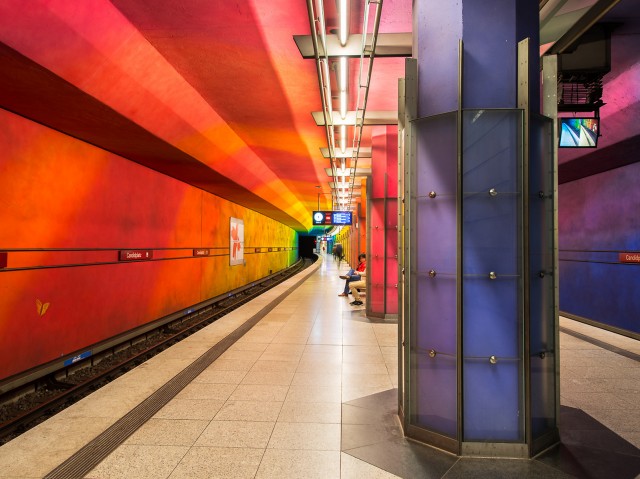
This article is adapted from a piece originally published by Rachel Wexler and Rachel Dinno Taylor in San Francisco Planning and Urban Research’s [SPUR] journal The Urbanist, on May 11 2015. Transit hubs are often massive, and massively underutilized, public spaces. Take for example the Bay Area Rapid Transit [BART] and San Francisco Muni Metro systems. Nearly 500,000 riders traipse the drab halls of these transit stations, heads down … Continue reading Placemaking, Underground: BART to Revitalize all 44 Stations

Seven Things Planners Need to Know About Airports

Planners who aren’t familiar with their local airport can easily overlook the facility. Here is what you should know: Our aviation system is expansive: At any given time, there are around 7,000 aircraft in the air over the U.S. which are being served by airports of varying sizes and roles. Only 12 percent of the public airports that receive federal funding are primary commercial service … Continue reading Seven Things Planners Need to Know About Airports

High Speed Rail: The Momentum is Building

In the age of fast everything, it’s about time the United States builds some fast trains. After all, Americans like fast things. It’s why we use Keurig coffee machines instead of French presses and why more of us get news from the New York Times Twitter feed than from an actual newspaper.   Despite our desire for everything fast, the overwhelming majority of Americans get … Continue reading High Speed Rail: The Momentum is Building